Follow us on:


No Large Incisions. No Screws or Rods. Just a Smoother Recovery from Lumbar Fusion.
Free MRI Review
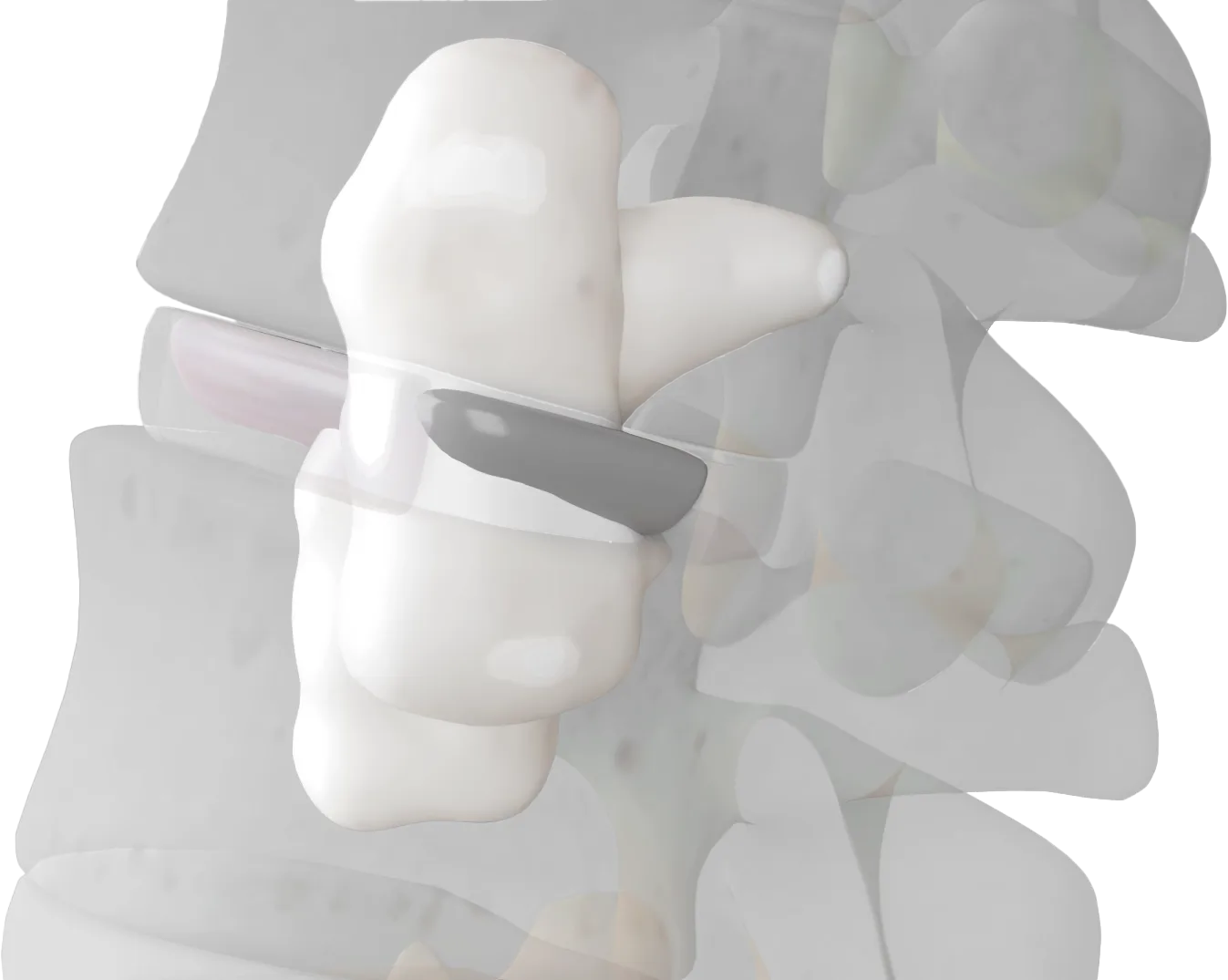
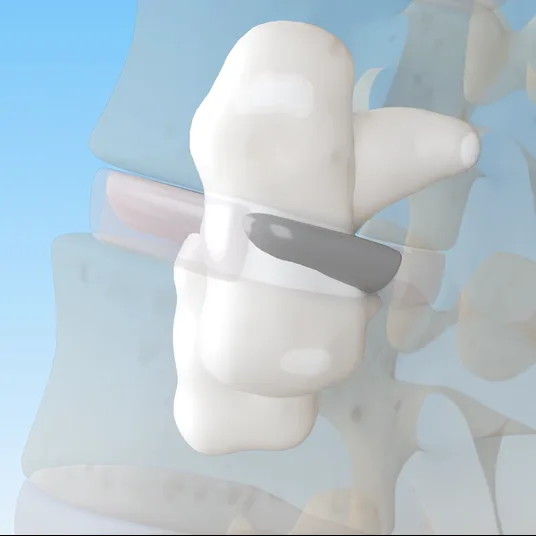
A Three-Step Look at How CemLIF Works

Your surgeon performs a standard anterior (ALIF) or lateral (LLIF) lumbar interbody fusion, placing a spacer to restore disc height and relieve pressure on compressed nerves.

Traditional lumbar fusion then requires a separate posterior incision to place screws and rods for added stability. CemLIF replaces that step with cement augmentation instead — skipping the extra incision and hardware, which is one reason recovery tends to be smoother than with a traditional rods-and-screws fusion.

CemLIF bonds the spacer to the adjacent vertebrae with bone cement instead of posterior hardware, effectively “casting” the spine to support the fusion as it heals — the same cement augmentation technique already used in other areas of orthopedic surgery, applied here to avoid a second incision for screws and rods.

This video compares CemLIF to a traditional rods-and-screws lumbar fusion — how the procedure works, and how avoiding a large posterior incision and additional hardware can mean a more comfortable recovery.
Watch the video

Dr. Mark Frenkel, MD, MA, FAANS, FCNS is a board-certified neurosurgeon and spine surgeon based in Naples, Florida. A fellow of the American Association of Neurological Surgeons and the Congress of Neurological Surgeons, Dr. Frenkel has authored numerous peer-reviewed publications in prestigious neurosurgical journals and contributed to several textbook chapters on advanced spinal surgery techniques. An early adopter and innovator in surgical technology, he was among the first to use augmented reality in surgery, having developed his own intraoperative neuro-navigation system. With over a decade of experience and thousands of successful cases, Dr. Frenkel is dedicated to delivering the highest quality of care.
Driven by a commitment to improving patient outcomes, Dr. Frenkel developed the CemLIF™ procedure. He observed that many patients undergoing lumbar fusion surgery faced significant pain and prolonged recovery due to the need for additional posterior incisions for screws and rods. While modern ALIF and LLIF techniques offer minimally invasive fusion options, they often require supplementary hardware that increases postoperative discomfort. Seeking a solution, Dr. Frenkel created the CemLIF™ to provide the necessary stability and strength without the need for screws, rods, or additional incisions — offering patients a smoother path to recovery than traditional fusion techniques.
Read more